The real vs fake christmas tree cost debate sounds simple until you count everything: the tree itself, the stand, storage, disposal, lights, and the trips you make each year. One choice wins on price for most households, and the gap surprises people. This guide runs the full ten-year math with honest numbers, then covers the non-money factors that still matter.
Say you spend $75 on a real tree each year because your local lot charges that for a six-foot fir. Say your neighbor spends $200 once on a decent artificial tree. After ten years you have paid $750 for trees alone, and your neighbor has paid $200. But the full real vs fake christmas tree cost picture adds stands, bags, storage bins, and disposal fees to both sides, so let us count every dollar before anyone declares a winner.
Table of Contents
Real vs Fake Christmas Tree Cost: The Full 10-Year Table
Most real vs fake christmas tree cost comparisons cheat. They count the sticker price of each tree and stop. A fair count includes the stand, the storage, the disposal, and the small yearly costs that follow each choice home. The table below uses mid-range US prices that match what big-box stores and local lots charged in recent seasons. Your local prices will differ, but the structure holds anywhere.
| Cost Item | Real Tree (10 Years) | Artificial Tree (10 Years) |
|---|---|---|
| Trees | $75 x 10 = $750 | $200 x 1 = $200 |
| Stand | $30 (one reusable stand) | $0 (stand included) |
| Storage | $0 | $25 (one storage bag) |
| Disposal bags and fees | $5 x 10 = $50 | $0 |
| Trips to buy or haul | $10 x 10 = $100 (fuel and time costs) | $0 after year one |
| Repairs and replacement parts | $0 | $30 (one light strand and branch fixes) |
| Total over 10 years | $930 | $255 |
| Average cost per year | $93 | $25.50 |
Check the real vs fake christmas tree cost math row by row. Real trees cost $750 plus $30 plus $50 plus $100, which equals $930. The artificial tree costs $200 plus $25 plus $30, which equals $255. The artificial tree saves $675 over ten years in this example, or $67.50 a year. That saving funds a lot of ornaments, a nice dinner, or a solid start on January bills.
Price swings change the real vs fake christmas tree cost gap but rarely flip it. A $50 real tree cuts the ten-year real total to $680, still far above $255. A premium $400 artificial tree raises the fake total to $455, still below the mid-range real total. Only a very cheap real tree habit, such as a $25 permit to cut your own tree in a national forest where permits exist, or a very pricey artificial tree, closes the gap fully.
What About Lights and Decorations?
Both trees need lights and ornaments, so those costs cancel out in a fair real vs fake christmas tree cost fight, with one exception. A pre-lit artificial tree bundles lights into the purchase price and saves you buying strands, but a failed light section can force a repair or an early replacement. An unlit artificial tree plus separate LED strands gives you cheaper fixes, because you replace a $10 strand instead of fighting a built-in wiring problem.
LED strands also cut your electric bill. The U.S. Department of Energy explains holiday lighting savings on its holiday lighting page and notes that LED strands use far less energy and last far longer than old incandescent strands. Whichever tree you pick, LED lights lower the yearly running cost to a few dollars for the season.
How the Real vs Fake Christmas Tree Cost Changes by Household
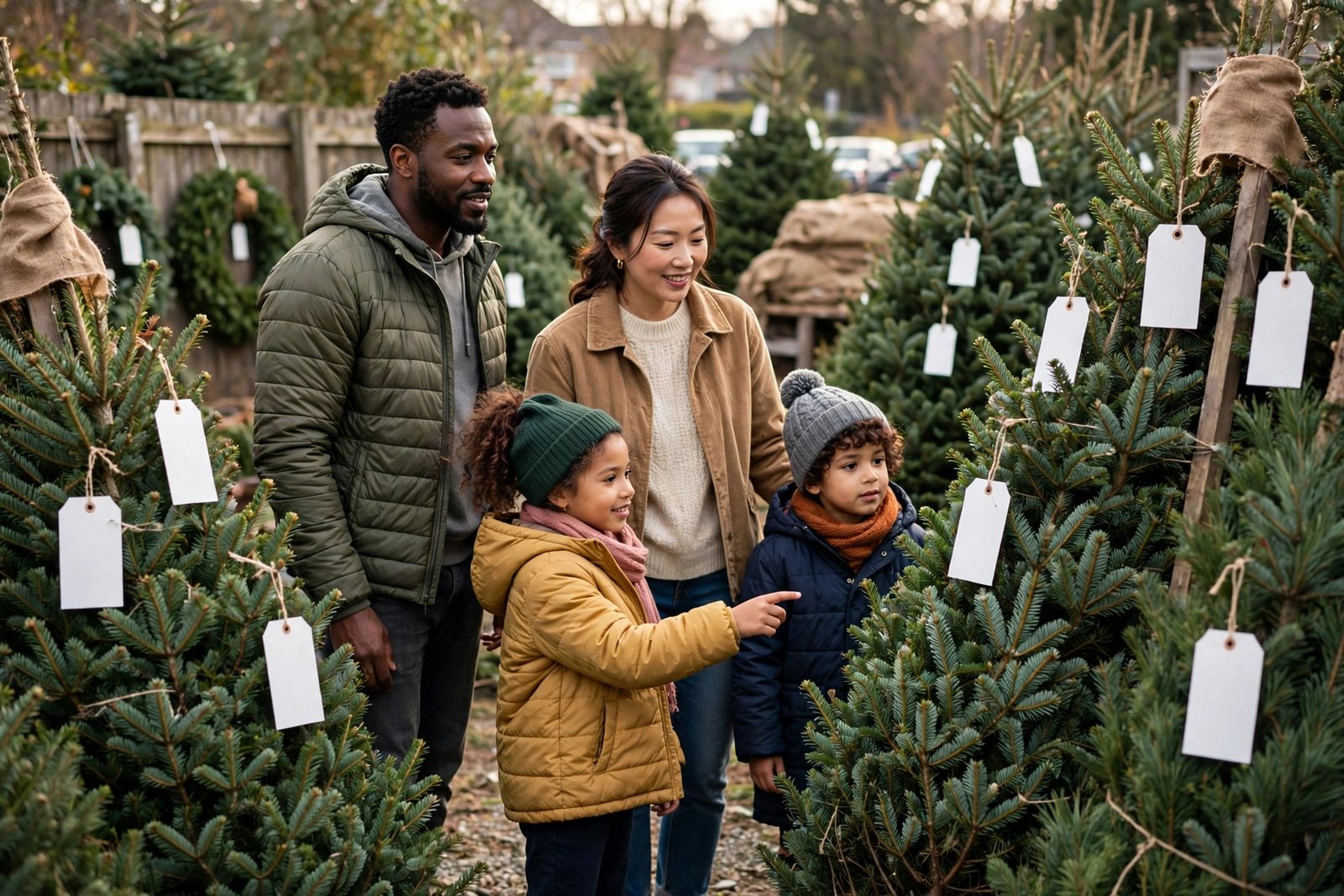
Your household details move the real vs fake christmas tree cost numbers. Apartment renters pay storage costs in space rather than dollars, and a bulky artificial tree can crowd a small closet for eleven months. Homeowners with a garage absorb storage for free. Families who travel every December use a tree for fewer days, which weakens the case for a fresh $75 tree that sits alone in a dark house.
Price Scenarios Worth Checking
| Scenario | 10-Year Real Cost | 10-Year Fake Cost | Winner |
|---|---|---|---|
| Budget real ($50 tree) vs mid fake ($200) | $680 | $255 | Fake by $425 |
| Premium real ($110 tree) vs mid fake ($200) | $1,280 | $255 | Fake by $1,025 |
| Mid real ($75 tree) vs premium fake ($400) | $930 | $455 | Fake by $475 |
| Cut-your-own permit ($25 total per year, all-in) vs mid fake ($200) | $280 | $255 | Nearly tied, fake by $25 |
| Mid real ($75) vs fake replaced at year 5 ($200 x 2) | $930 | $455 | Fake by $475 |
Study the last two rows of this real vs fake christmas tree cost table, because they carry the honest caveats. A family with cheap permit access and a truck already fueled for other errands can run real trees for close to artificial money. And a cheap artificial tree that falls apart in five years doubles its purchase line, though it still wins in this example. Quality decides how long the fake tree lasts, and a sturdy mid-range tree often serves fifteen years, which drops its yearly cost below $17.
Renters should count one more line in the real vs fake christmas tree cost count: moving. An artificial tree moves with you in its bag. A real tree habit restarts fresh each year with no hauling at all. Neither cost shows up in dollars, but both show up in December stress.
The Case for a Real Tree That Money Cannot Settle
Plenty of families choose real trees with open eyes and full knowledge of the real vs fake christmas tree cost math. The smell of a fresh fir fills a house in a way no candle copies. The trip to the lot or farm becomes a family ritual that kids remember for decades. Real trees support local growers and tree farms, and cities mulch used trees into park paths and garden beds.
Real trees also skip the storage problem entirely. You buy it, enjoy it, and send it out with January cleanup. Households with allergies to dust or storage mold sometimes breathe easier with a fresh tree each year, though some people react to pine pollen and mold on real trees instead. Each household knows its own noses.
A real tree also forces a fresh start each year. You cannot procrastinate setup for a tree that dries out. Some families love that deadline. Others hate it. Know your household before you let anyone shame you either way.
Hidden Costs of a Real Tree
- Watering takes a minute daily, and a dry tree turns into a fire risk fast.
- Needles drop for weeks and clog vacuum cleaners.
- Late buyers face picked-over lots and higher prices.
- Disposal rules vary by city, and some towns charge a pickup fee.
- Pets drink tree water and chew low branches, which adds vet risk.
Fire safety deserves a plain sentence. Keep a real tree watered, place it away from heat sources, and turn lights off overnight. A well-watered tree resists ignition far better than a dry one, and your watering habit decides which tree you own by week three.
The Case for an Artificial Tree, Beyond the Price
An artificial tree goes up on your schedule. You can set it up the day after Thanksgiving or on December 20 and the tree looks identical. It drops no needles, drinks no water, and triggers fewer allergies for dust-free households that store it sealed. You shape the branches once and the tree holds that shape for years.
Consistency helps budgeting, too. A known zero tree cost each December simplifies a small Christmas budget because one whole category disappears. Families working toward a debt-free Christmas often love removing a $75 to $110 yearly charge during the exact years money feels tightest.
Hidden Costs of an Artificial Tree
- Storage eats closet, attic, or garage space for eleven months a year.
- Cheap trees shed, lean, and lose their shape within a few seasons.
- Pre-lit trees can fail in sections and frustrate repairs.
- Most artificial trees use PVC plastic and metal, and landfills receive them at end of life.
- A style you loved in 2026 may feel dated by 2031, and the sunk cost pressures you to keep it.
The environmental side of the real vs fake christmas tree cost debate cuts both ways, and honest people disagree. A real tree grows for years, absorbs carbon, and biodegrades after use, but farms use fuel, water, and transport each year. An artificial tree carries a manufacturing and shipping footprint once, and the footprint per year shrinks the longer you keep it. Most lifecycle analyses suggest you must keep an artificial tree for many years, often a decade or more, to offset its production footprint. The ten-year horizon in this guide serves both your wallet and that goal.
Pros and Cons of Real vs Fake Christmas Trees
Pros and Cons of a Real Tree
- Pro: Fresh scent and a yearly family ritual at the lot or farm.
- Pro: No storage space needed for eleven months.
- Pro: Biodegrades and supports local growers and mulch programs.
- Con: Costs about $93 a year all-in in our mid-range example.
- Con: Needs daily watering and drops needles constantly.
- Con: Prices rise each year and late shoppers lose selection.
Pros and Cons of an Artificial Tree
- Pro: Costs about $25.50 a year all-in over ten years in our example.
- Pro: Sets up any day, drops no needles, and needs no water.
- Pro: Looks full and even every single year.
- Con: Needs storage space and a good bag to stay clean.
- Con: Cheap models wear out and pre-lit models frustrate repairs.
- Con: Plastic construction lands in a landfill at end of life.
How to Buy an Artificial Tree That Actually Lasts 10 Years
Durability decides whether the fake side of the real vs fake christmas tree cost math works. A $60 bargain tree that collapses in year four costs more per year than a $200 tree that serves twelve. Shop for a sturdy metal trunk, hinged branches that fold without force, and a high tip count for the size, since tip count drives fullness more than height claims do.
Timing cuts the price hard. Stores slash artificial tree prices in the week after Christmas, often by 50 to 75 percent. Buying your next tree during after-Christmas clearance sales turns a $200 tree into a $60 to $100 tree and drops the ten-year fake total below $155. That single move widens the savings gap to more than $775 against mid-range real trees.
Test the tree in the store when you can. Shake it gently. Bend a branch tip. Check the stand for wobble. Read the warranty, because a five or ten year warranty signals a maker who expects the tree to last. Keep the receipt and the box photo in your phone in case a section fails.
Storage Habits That Protect the Tree
- Compress branches upward gently and slide the tree into a zippered storage bag.
- Store the bag upright in a dry closet rather than a damp garage when you can.
- Keep the bag away from heat sources that warp plastic tips.
- Toss a label on the bag with the year and any repair notes for next season.
How to Spend Less on a Real Tree Every Year
Real tree loyalists can shrink their real vs fake christmas tree cost gap. Buy early in the season when lots stock full selection at standard prices, or buy in the final week when some lots discount remaining stock, accepting a shorter display window. Choose a slightly smaller tree, because price climbs fast with height and a six-foot tree often costs $20 less than a seven-foot tree from the same lot.
Consider a tree farm that lets you cut your own, or a national forest permit where the program exists near you. Permits often cost $5 to $20, though you supply the saw, the truck, and the work. Add your fuel honestly and the deal still beats lot prices for many rural households, as the scenario table above shows.
Reuse the stand, skip the flocking upcharge, and take free trimming cuts home for wreaths and table greens. One purchase then decorates three rooms. Small habits like these trim $20 to $40 a year, which compounds to $200 to $400 over the decade this guide tracks.
Decorating on a Budget, Whichever Tree You Choose
Decorations tempt people to overspend because stores display them at the exact moment holiday feelings peak. Set a decoration budget before you shop, such as $30 a year, and direct it at items that last. A family building decorations slowly owns a beautiful tree in five years without a single painful December.
A $40 Decorating Plan That Looks Full
| Item | Cost | Why It Works |
|---|---|---|
| Two LED light strands (on sale) | $14 | Light creates most of the glow people notice |
| Paper chain and popcorn garland supplies | $4 | Kids make them and they fill space cheaply |
| Twelve basic ball ornaments (clearance pack) | $10 | One color family looks deliberate and calm |
| Ribbon for a tree topper bow | $5 | Cheaper than a topper and stores flat |
| Thrift store ornament finds | $7 | Unique pieces at a fraction of retail |
| Total | $40 |
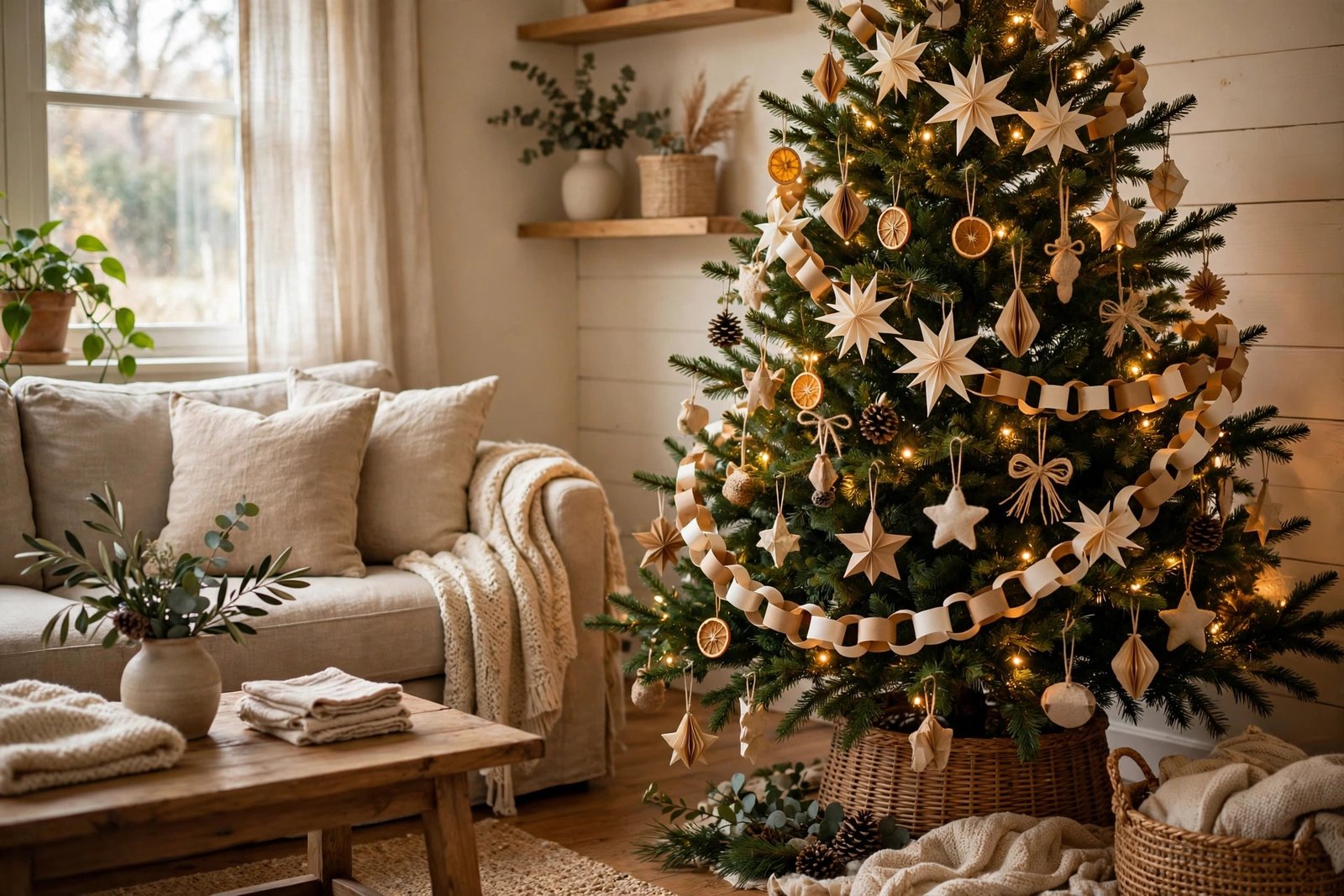
The plan totals $14 plus $4 plus $10 plus $5 plus $7, which equals $40 exactly. Light does the heavy lifting, one color family creates the designed look, and homemade garlands add the personal layer guests actually comment on. Next year you add one $10 to $20 piece you love, and the collection grows without pain.
Free decorations surround you. Pinecones, dried orange slices, cinnamon sticks tied with twine, and last year’s Christmas cards cut into garland shapes all cost almost nothing. Kids who make decorations remember them longer than any store-bought set. And when you plan the food budget with the same care, our guide to a Christmas dinner budget keeps the meal from eating the money you saved on the tree.
Shoppers who time decoration buys for late December sales and January clearance build the best collections for the least money. Our Black Friday budget approach works here too: list what you need, set the cap, and walk past everything else, even at 70 percent off, because a bargain you do not need still spends real dollars.
Which Tree Fits Your Next 10 Years?
Run your own real vs fake christmas tree cost numbers with the table structure above. Swap in your local real tree price, your storage reality, and the artificial tree price you would actually pay. Most households find the artificial tree wins on cost by several hundred dollars over a decade. Some households then choose real trees anyway for the ritual, the scent, and the farm trip, and that choice deserves respect when the budget absorbs it honestly.
Households in a debt payoff push usually gain the most from switching, because $67.50 a year plus a clearance-priced tree frees real cash. Use our free savings goal calculator to see what redirecting that yearly saving does over the same ten years. Small recurring wins stack, and the tree decision is one of the easiest recurring wins on the December calendar.
Renters in tiny apartments might land on a third option: a small tabletop tree, real or fake, at $15 to $30. The ten-year math favors small in every category, and a small tree with good lights looks charming rather than cheap. Let your space and your budget lead, not tradition or guilt.
What Happens When Your Plans Change Mid-Decade?
Ten years is a long time, and households change inside a decade. A family that buys an artificial tree and then moves to a smaller apartment can sell the tree used, often for $40 to $80 if the tree still looks full, which cuts the net cost further. A family that commits to real trees and then welcomes a baby with allergies can switch in any year with no sunk cost at all, because each real tree stands alone as a one-year decision.
That flexibility carries real value, and honest real vs fake christmas tree cost comparisons should name it. The artificial tree wins the math when life stays stable. The real tree habit wins on flexibility when life keeps changing. Renters who move every two years, military families who relocate often, and anyone who suspects a move abroad should weigh flexibility heavily, because shipping a bulky artificial tree across the country can cost more than the tree itself.
A middle path in the real vs fake christmas tree cost debate suits many households. Buy a modest artificial tree for the main room during the tightest budget years, and add one small real wreath or a bundle of fresh greens for the scent and the ritual at $10 to $15. You capture most of the savings and most of the feeling at the same time, and you can reverse the mix in any year your budget loosens. Compromise is not failure here; it is budgeting working exactly as it should.
Questions People Ask About Real vs Fake Christmas Tree Cost
How many years does an artificial tree need to last to beat a real tree on cost?
In our mid-range real vs fake christmas tree cost example, the $200 artificial tree passes the real tree habit during year three, because three real trees plus a stand cost about $255. Cheaper artificial trees break even sooner. Expensive premium trees can take four to five years.
What does a real Christmas tree cost per year, all in?
Our example totals $93 a year once you count the $75 tree, a share of the stand, disposal bags, and yearly trips. Budget lots and cut-your-own permits cut that figure sharply, while premium city lots push it past $128 a year.
Do artificial trees save money even with storage costs?
Yes, in most real vs fake christmas tree cost cases. A $25 storage bag once a decade barely dents the $675 ten-year saving in our example. Renters who pay for a storage unit face different math, but a tree alone rarely justifies a unit.
Which tree costs less to decorate?
Both cost about the same. Pre-lit artificial trees bundle lights into the price, while real trees need strands you buy once and reuse for years. LED strands keep the running cost to a few dollars a season for either tree.
Is a real tree always better for the environment?
Not always. Real trees biodegrade and support farms, but yearly transport and farming add up. An artificial tree carries a bigger upfront footprint that shrinks per year the longer you keep it, so keep one at least ten years.
When do artificial trees go on sale?
Stores cut prices deepest in the week after Christmas, often 50 to 75 percent. Smaller sales run in November. A clearance purchase can drop a $200 tree below $100 and transforms the ten-year comparison. That timing is the easiest win in the whole real vs fake christmas tree cost comparison.
What to Do This Week
- Price a real tree at two local lots and note the full cost for your preferred height.
- Price one sturdy mid-range artificial tree and read its warranty and tip count.
- Run both numbers through the ten-year real vs fake christmas tree cost table structure in this guide with your own figures.
- Check your storage space honestly before you choose the artificial route.
- Set a decoration budget, such as $40, and buy lights first.
- Mark the after-Christmas clearance dates on your calendar if you plan to buy artificial for next year.
The real vs fake christmas tree cost winner for most wallets is the artificial tree, by about $675 over ten years at mid-range prices. Your ritual, your space, and your nose get a vote too. Run your numbers, choose on purpose, and decorate the winner well within your budget.

Bilal founded HowToFixMyMoney.com in 2026 to make US personal finance decisions easier to work through without a financial background. Every figure published here traces back to a primary source — the Bureau of Labor Statistics, the Federal Reserve, the IRS, the CFPB — and each article links to the data it relies on. He is not a licensed financial advisor, and nothing on this site is personalized advice.