A full holiday table does not require a frightening grocery bill. Planning a christmas dinner on a budget means you choose the menu on paper first, price every dish before you shop, and walk into the store with a list that ends the panic buying. You feed eight people well, and you keep the receipt calm. A working christmas dinner budget is a promise you make to your January self, and this guide builds one step by step.
The panic shop causes most holiday food overspending. You enter the store on December 23 with no list, a hungry stomach, and a vague fear of running short. You buy double of everything, plus treats nobody planned, plus a backup dessert in case the first one fails. Your christmas dinner budget removes that fear with simple math done a week early.
Say you set $85 for dinner for eight. That equals $10.63 per person. A restaurant holiday meal costs $35 to $60 per person before drinks and tip. Your home table delivers the same warmth for about a fifth of the price, and your guests care about the company far more than the cut of meat. That difference is exactly what a christmas dinner budget protects.

Table of Contents
You Set the Per-Person Number Before You Pick the Menu
Start with people, not dishes. Count eight seats. Decide your per-person target, maybe $9 to $12. Multiply. That total becomes your menu budget, and every dish you add must fit inside it. This order of operations stops the classic error of planning a $160 menu on a $90 budget.
Households that costed Thanksgiving this way already know the method. The Thanksgiving Dinner Cost Calculator breaks a holiday meal into per-person and per-dish costs, and the same costing method works perfectly for Christmas. Enter your dishes, check the per-person total, and swap one expensive item before you ever leave home.
Keep a small buffer inside the total. Prices move in December, and one item will cost more than you guessed. A $7 buffer inside your christmas dinner budget absorbs that surprise without a second trip or a credit card swipe.
Guests Eat Less Than Hosts Fear
Hosts overbuy because empty platters feel like failure. In truth, a rich holiday meal fills people fast. Plan about 1 to 1.25 pounds of whole turkey per person before cooking, or about half a pound of boneless ham per person, plus sides at roughly a cup per person per dish across four sides. Leftovers still happen. Starvation never does.
Ask one trusted guest about appetites and allergies early. A vegetarian guest, a nut allergy, or three small children change quantities in ways that save you money when you know them in advance. Guessing wastes food. Asking protects your christmas dinner budget.
A Full Menu Cost Table Proves Your Christmas Dinner Budget Works
Here is a complete menu for eight, priced at typical supermarket levels in December. Your local prices will vary a little, and store brands cut several lines further. The structure matters more than any single price.
| Dish | Main items | Estimated cost |
|---|---|---|
| Roast turkey, about 12 lb at about $1.04/lb on sale | Turkey, butter, basic herbs | $12.50 |
| Mashed potatoes, 5 lb bag | Potatoes, milk, butter | $6.00 |
| Roasted carrots and green beans, frozen or fresh on sale | Vegetables, oil, garlic | $7.50 |
| Stuffing from store-brand mix plus celery and onion | Two boxes mix, produce | $6.50 |
| Gravy from pan drippings and stock | Stock carton, flour | $2.50 |
| Cranberry sauce, two cans | Canned sauce | $3.00 |
| Dinner rolls, 12 pack | Bakery rolls | $4.00 |
| Simple green salad | Lettuce, cucumber, dressing | $6.00 |
| Apple pie, store bakery or frozen | One large pie | $7.00 |
| Drinks: lemonade and sparkling water | Two large bottles each | $6.00 |
| Pantry extras: butter, oil, spices top-up | Shared staples | $8.00 |
| Total | $69.00 |
That table totals $69 for eight people, or $8.63 per person. It leaves $16 of headroom inside an $85 budget for a nicer pie, a second vegetable, or the price rise you did not predict. A christmas dinner budget succeeds because the numbers sit on paper before emotion enters the store.
You Choose the Main Dish by Price Per Pound, Not Tradition Alone
Turkey usually wins the value contest in December because stores discount it hard to pull shoppers in. Ham runs higher per pound but needs almost no cooking skill and serves beautifully cold the next day. A whole chicken or a pork shoulder undercuts both when turkey prices spike in your area. Your christmas dinner budget decides by the pound, not by habit.
| Main dish | Typical sale price per lb | Amount for 8 | Approx. cost | Cooking effort |
|---|---|---|---|---|
| Whole turkey | $0.79 to $1.19 | 12 lb | $10 to $14 | High, needs thawing and timing |
| Bone-in ham | $1.29 to $1.99 | 8 lb | $11 to $16 | Low, mostly reheating |
| Whole chickens (two) | $0.99 to $1.49 | 9 lb total | $9 to $13 | Medium |
| Pork shoulder | $0.99 to $1.79 | 6 lb boneless | $6 to $11 | Low, slow cooks all day |
| Beef roast | $4.49 to $6.99 | 4 lb | $18 to $28 | Medium |
Read the table honestly. Beef tastes wonderful and blows the per-person math apart. Pork shoulder feeds eight for the price of a pizza and tastes like you planned it all year. Choose with your christmas dinner budget in charge and your pride in the back seat.
The U.S. Department of Agriculture publishes safe cooking temperatures and thawing guidance for holiday meats, and the U.S. Department of Agriculture site links to its food safety pages. A turkey needs to reach 165 degrees in the thickest part. Safe food protects your guests and protects the money you spent, because a spoiled main dish wastes the whole budget line.
You Build Sides From Cheap Staples That Taste Like Tradition
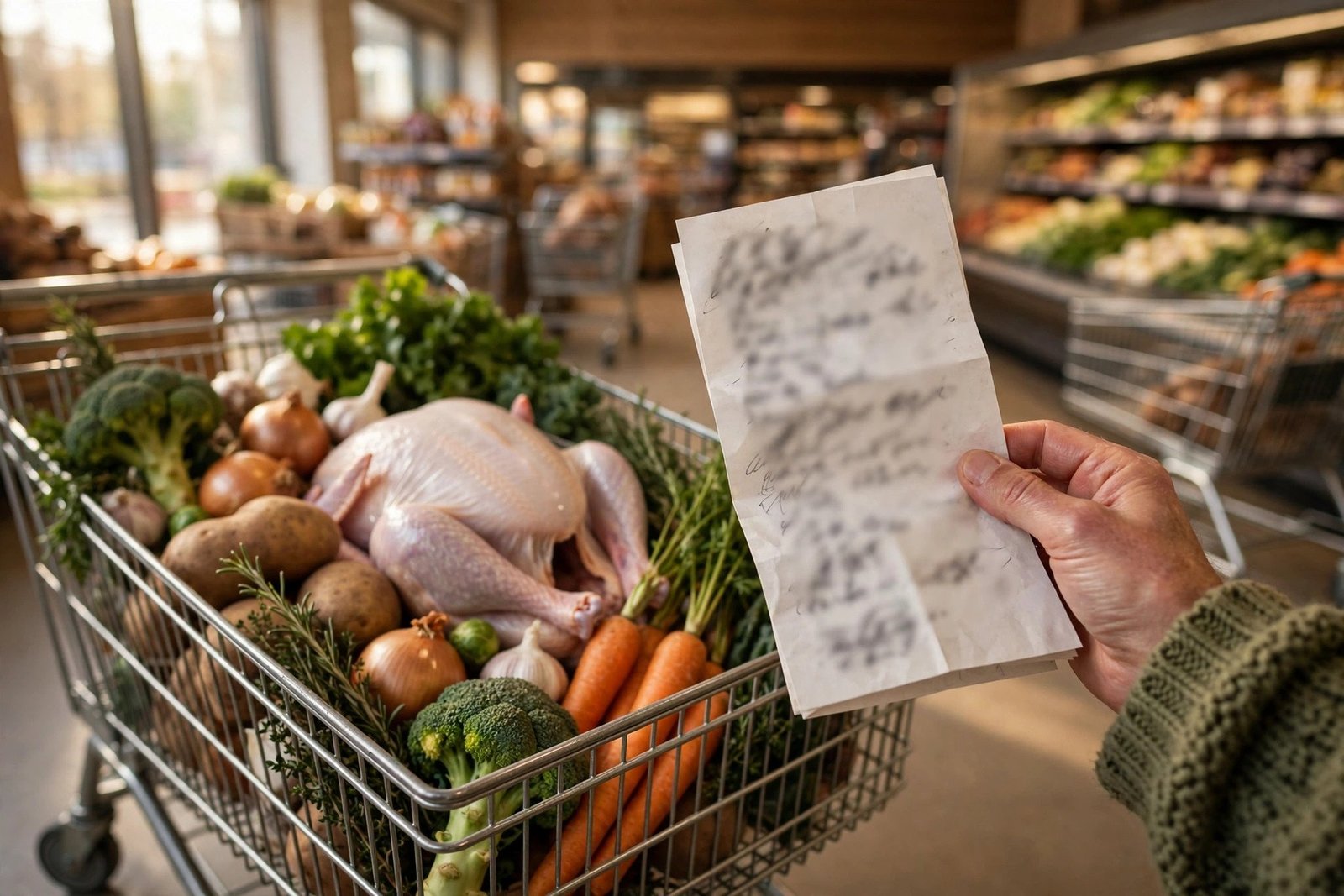
Potatoes, carrots, cabbage, frozen green beans, and bread-based stuffing carry holiday flavour at staple prices. These foods fill plates, satisfy appetites, and cost a fraction of out-of-season fresh produce. Nobody at the table mourns the missing asparagus in December.
Seasoning does the heavy lifting. Garlic, a little butter, stock, and herbs turn plain vegetables into dishes people request again. Buy spices at discount stores or in bulk bins where a few spoonfuls cost cents. A $5 jar of a spice you use once a year never belongs in a christmas dinner budget.
Families who already run a monthly budget template on a low income can slot dinner into the normal grocery line plus a small holiday addition, rather than treating it as a separate emergency. Food you plan inside the regular budget never surprises you.
One Dessert, Done Well, Beats Three Desserts Done Badly
Pick one dessert and serve it proudly. A bakery apple pie, a homemade crumble from frozen fruit, or a simple chocolate cake all finish the meal cleanly. Three desserts triple the cost, split appetites, and leave you storing leftovers for a week. Guests remember one good pie. They forget a dessert buffet by New Year.
Invite a guest who loves baking to bring dessert. Most families hold one person who genuinely enjoys that job and feels honoured by the request. Delegating one dish cuts your cost and your workload at the same time. Pride makes hosts refuse help. Smart hosts accept it and enjoy their own party.
You Shop in Two Calm Trips Instead of One Panic Trip
Trip one happens a week ahead. Buy shelf-stable items, frozen items, drinks, and anything on early sale. Trip two happens two days ahead. Buy fresh produce, rolls, and the salad items. This split spreads the cost across two paydays for some households, cuts spoilage, and keeps each trip short enough to stick to the list.
Shop after a meal, list in hand, and set a timer if the store overwhelms you. End-cap displays sell feelings, not dinner. Walk past the matching napkins, the scented candles, and the premium chocolate display. Your table needs none of them, and your christmas dinner budget knows it.
Shoppers chasing extra money before christmas often find the grocery list is the easiest place to free up cash, because food overspending hides in small extras rather than one big item. Ten unplanned $4 extras equal a whole side dish budget, spent on nothing anyone remembers.
You Borrow, Swap, and Skip Before You Buy Anything New
Check your kitchen before the store. Most homes already hold flour, oil, sugar, basic spices, and butter. Cross every owned item off the list and watch the total drop. Borrow a roasting pan, a big serving bowl, or folding chairs from a neighbour instead of buying equipment for one day a year.
Swap ingredients with confidence. Frozen vegetables roast nearly as well as fresh for this meal and cost half as much in December. Store-brand stock, stuffing mix, and cranberry sauce match the name brands on a crowded table where gravy covers everything. Save your brand loyalty for items people taste on their own.
Skip the appetiser course entirely or keep it to one bowl of popcorn or nuts. Guests arrive hungry for dinner, and a heavy starter course adds $10 to $15 while shrinking appetites for the food you worked hardest on. Your christmas dinner budget protects the main event.

You Plan Leftovers as a Second and Third Meal
Leftovers turn one dinner into three days of cheap eating, and that value belongs in your christmas dinner budget math. Turkey becomes sandwiches on day two and soup on day three. Ham joins eggs at breakfast and beans at dinner. Mashed potatoes fry into cakes. Planned leftovers stretch the $69 menu across roughly 20 plates of food, which drops the true cost per plate near $3.45.
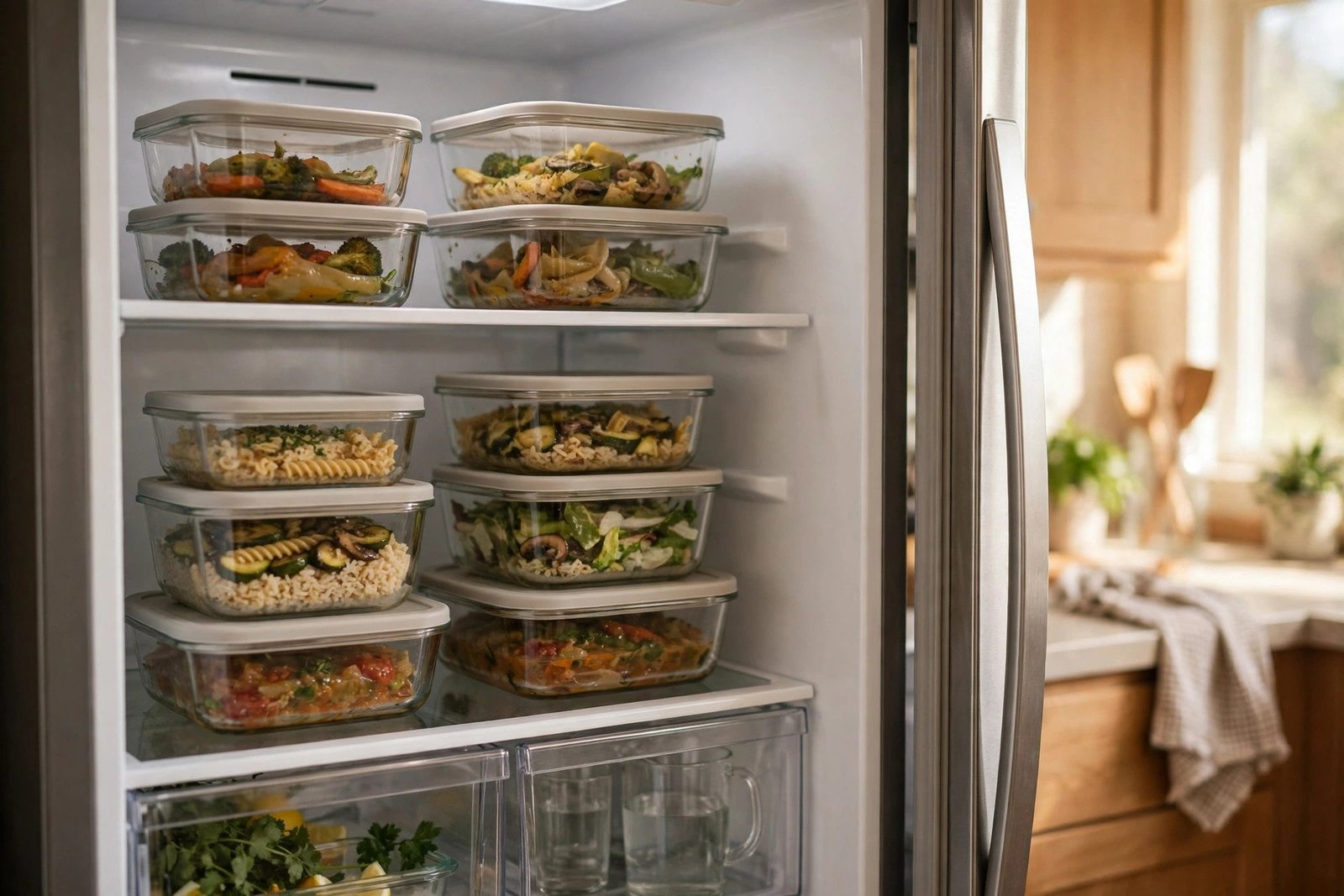
Store leftovers within two hours of the meal. The USDA food safety guidance puts cooked food in the fridge inside that window and uses most leftovers within three to four days. Label containers with the date. Freeze soup and sliced meat in portions if your week runs long, and you convert holiday spending into January lunches.
Send guests home with a container if your fridge overflows. Sharing leftovers cuts waste, spreads goodwill, and stops you eating the same meal five days straight out of guilt. Food you give away with a smile still counts as money well spent.
The Pros and Cons of Hosting Christmas Dinner on a Tight Budget
Pros
- You feed eight people for roughly the cost of two restaurant meals.
- You control ingredients, portions, and timing completely.
- Leftovers cover several more meals and lower your late-December grocery bill.
- Guests relax longer at a home table than at a restaurant table.
- You build a repeatable menu and cost list that next year reuses in minutes.
Cons
- You carry the planning, cooking, and cleaning workload.
- Cheap cuts need more time and care to taste their best.
- One failed dish has no backup unless you planned one.
- Guests may expect premium items tradition promised them in richer years.
- Small kitchens strain under a full menu for eight.
Most cons shrink with delegation. Ask one guest to bring drinks, another to bring ice and rolls, and a third to wash dishes while you plate dessert. Shared work turns hosting from a burden into the actual point of the day, which is people in a room together, fed and unhurried.
You Keep Drinks and Extras From Doubling the Bill
Drinks quietly wreck food budgets. Two fancy sodas, a juice selection, sparkling drinks for kids, coffee, and cream can add $18 to $25 before anyone sits down. Choose two drinks, serve water proudly in a jug with lemon slices, and make coffee from what you own. Guests hydrate happily and nobody audits your drink menu.
Extras creep in the same way. Matching crackers, premium cheese, olives, and dips feel small at $4 each and total $20 fast. Set an extras line of $5 in your christmas dinner budget. When the line fills, the extras stop. A boundary you set at home holds far better than willpower at the shelf.
If December money feels tight across the board, our small christmas budget plan spreads one total across gifts, food, and travel so dinner never silently eats the gift money. And if relatives debate who hosts next year, our sibling guide to a christmas travel budget helps the travelling side of the family plan their share fairly.
You Feed Unexpected Guests Without Cooking a Second Dinner
One or two extra guests appear in most years. A partner nobody mentioned, a neighbour alone for the day, a cousin passing through town. Your budget survives these surprises when you build stretch into the cheap parts of the menu. Potatoes, stuffing, rolls, and salad scale up for a dollar or two per extra person. The main dish rarely needs to grow at all, because hosts slice thinner and sides fill the plate.
Keep one emergency item in the freezer, such as a bag of frozen meatballs or a second small chicken, bought on sale in November. If guests multiply, you cook the backup. If they do not, the item becomes a January dinner and nothing goes to waste. That single habit removes the fear that drives most panic shopping on December 23.
Seat extra guests with confidence and never apologise for the menu. People accept invitations for company, warmth, and a hot meal. A table that stretches to fit them honours the season better than a perfect menu served to a stressed host who counted every chair with dread.
You Cut Cooking Stress With a Simple Timeline
Stress causes spending, because tired hosts buy shortcuts at premium prices. A timeline prevents both. Three days ahead, confirm the menu, the guest count, and who brings what. Two days ahead, shop trip two and set the table. One day ahead, make the pie or buy it, prep vegetables, and chill drinks. On the day, cook the main dish first and sides in waves that share oven space.
Write the timeline on paper and tape it inside a cupboard door. Check items off as you finish them. That visible progress calms the whole kitchen, and helpers can read the list and act without asking you questions every five minutes. Calm hosts spend less, burn less, and actually taste their own dinner.
Families following a debt free christmas plan often say the timeline matters as much as the money rules. A planned day feels generous. A chaotic day feels expensive even when the receipt says otherwise, because chaos sends you back to the store twice for forgotten items at full price.
You Handle Dietary Needs Without Cooking Two Menus
One vegetarian, one guest avoiding gluten, and one picky child can frighten a host into cooking three separate meals. Resist that urge. Build the shared sides so most of them suit everyone. Roasted vegetables, salad, potatoes made with oil for a portion, and rolls on the side already cover most needs. Add one simple extra protein, such as a small lentil dish or a store-bought vegetarian option, and every guest eats well from one menu.
Ask about needs when you invite, not when you shop. Early knowledge costs nothing and shapes the list once. Late surprises cost a special trip and a premium product. Your christmas dinner budget and your guests both win when a two-minute question happens in November.
You Set the Table the Day Before and Save Your Morning
Lay out plates, glasses, cutlery, and serving spoons the night before. Count chairs. Find the big spoon before the gravy needs it. This quiet half hour removes a dozen small morning scrambles, and each scramble you remove lowers the odds of a last-minute store run for a forgotten essential at holiday prices.
Chill drinks overnight so fridge space on the day goes to food. Put a sticky note on each serving dish naming its dish. Helpers plate food in the right bowls without asking, and your table fills in an orderly way that looks planned, because it was.
Questions People Ask About Your Christmas Dinner Budget
How much does Christmas dinner for 8 people cost?
A planned home dinner for eight typically costs $65 to $95 at supermarket prices, or about $8 to $12 per person. Turkey on sale, staple sides, and one dessert keep you near the low end. Beef roasts and premium drinks push you past $150 fast. That range is exactly what a christmas dinner budget is built to hold.
What is the cheapest main dish for Christmas dinner?
Pork shoulder and sale-price turkey usually cost the least per person. Pork shoulder often runs $6 to $11 for enough to feed eight, and turkey on a December sale lands close behind with more traditional flavour. Either choice keeps a christmas dinner budget comfortably under $100.
How much turkey do I need for 8 people?
Plan about 1 to 1.25 pounds of whole turkey per person, so a 10 to 12 pound bird covers eight adults with some leftovers. Smaller appetites and lots of sides let a 10 pound bird stretch comfortably. That sizing rule is the backbone of any christmas dinner budget.
How do I stop overspending on holiday groceries?
Write the menu and the cost table first, shop in two planned trips with a list, set a small extras line, and skip appetisers and premium drinks. Most overspending comes from unplanned extras, not from the main dishes. A written christmas dinner budget kills most of them at home.
Can I ask guests to bring a dish?
Yes, and most guests feel glad to help. Assign specific items like drinks, rolls, or dessert so you avoid duplicates. Delegating one or two dishes cuts your cost and your workload without changing the feel of the day. Shared dishes are the easiest way to protect a christmas dinner budget.
How long do Christmas leftovers stay safe?
Refrigerate leftovers within two hours and eat most of them within three to four days. Freeze sliced meat and soup in portions for later weeks, and label every container with the date you stored it.
What to Do This Week
- Count your seats, set your per-person target, and write the total at the top of a fresh page.
- Pick your main dish by price per pound and build the christmas dinner budget cost table before you shop anywhere.
- Run your dish list through the holiday dinner cost calculator method and swap any dish that breaks the total.
- Shop trip one this week for shelf-stable, frozen, and sale items, and cross off everything your kitchen already holds.
- Plan leftover meals for December 26 and 27 now, and buy storage containers only if you truly lack them.
A calm table comes from a calm plan. Price the menu on paper, trust your christmas dinner budget, shop twice with a list, and spend Christmas Day with your people instead of with your regrets.

Bilal founded HowToFixMyMoney.com in 2026 to make US personal finance decisions easier to work through without a financial background. Every figure published here traces back to a primary source — the Bureau of Labor Statistics, the Federal Reserve, the IRS, the CFPB — and each article links to the data it relies on. He is not a licensed financial advisor, and nothing on this site is personalized advice.