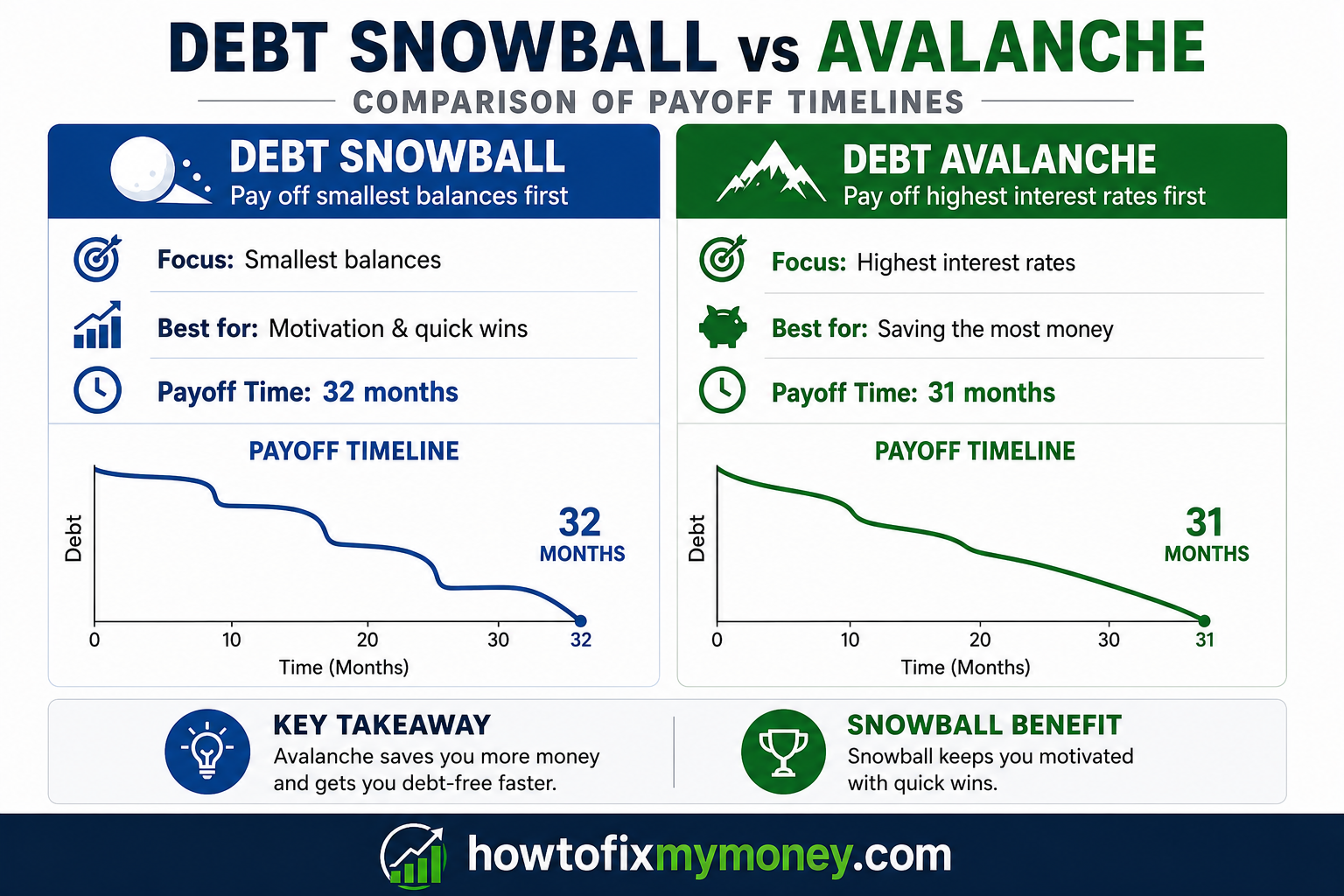
Before we start, let’s look at the difference between the debt snowball and the debt avalanche. These are the two most popular ways to pay off debt, and almost everyone starting a payoff plan has to pick one. The debt snowball focuses on clearing your smallest balances first. The debt avalanche focuses on your highest-interest debt first. Both work. Both will get you to zero. But they do not get you there at the same speed, and they do not feel the same along the way.
This guide explains both methods in simple, easy English, shows you a real example with real numbers, and helps you choose the one you are most likely to finish. Because the honest truth is this: the fastest debt payoff method on paper is not always the fastest one in real life.
What Is the Debt Snowball Method?
The debt snowball method means you pay off your smallest balance first, no matter what interest rate it charges. Once that debt is gone, you take the money you were paying on it and add it to the next smallest debt. Your payment grows bigger and bigger as you go, like a snowball rolling downhill.
How the Debt Snowball Works, Step by Step
- List all your debts from the smallest balance to the largest. Ignore the interest rates for now.
- Pay the minimum payment on every debt so nothing goes late.
- Put every spare dollar you have onto the smallest debt.
- When that debt hits zero, move its whole payment onto the next smallest debt.
- Repeat until every debt is gone.
The power of this method is not in the math. It is in the momentum. You clear a debt quickly, you feel it working, and you keep going.
Who the Snowball Suits
The snowball tends to suit people who have tried to pay off debt before and given up. It also suits anyone carrying several small balances, because those disappear fast and the list gets shorter quickly.
If you are currently behind on payments, it is worth reading our guide on how to budget when you are already behind on every bill before you start either method. A payoff plan only works once the bleeding has stopped.
What Is the Debt Avalanche Method?
The debt avalanche method means you pay off the debt with the highest interest rate first, no matter how big the balance is. Once that debt is cleared, you move to the next highest rate. You keep going until everything is paid.
How the Debt Avalanche Works, Step by Step
- List all your debts from the highest interest rate to the lowest. Ignore the balances for now.
- Pay the minimum payment on every debt.
- Put every spare dollar onto the debt with the highest rate.
- When that debt hits zero, move its payment onto the next highest rate.
- Repeat until you are debt free.
The avalanche is the mathematically correct answer. Interest is what makes debt expensive, so killing the most expensive interest first always costs you the least money overall.
Who the Avalanche Suits
The avalanche suits people who are motivated by numbers rather than quick wins. It works well if you have one large, high-rate credit card sitting on top of a few smaller, cheaper debts. It also suits anyone with a steady income who knows they will stick to a plan for a year or more without needing regular encouragement.
Debt Snowball vs Avalanche: The Main Differences
Here is the simplest way to see the two methods side by side.
| What to Compare | Debt Snowball | Debt Avalanche |
|---|---|---|
| You pay off first | The smallest balance | The highest interest rate |
| Main strength | Motivation and momentum | Lowest total interest cost |
| Main weakness | Usually costs more in interest | The first win can take a long time |
| First debt cleared | Usually within a few months | Can take a year or longer |
| Best for | People who need to see progress | People driven by numbers |
| Risk of quitting | Lower | Higher |
| Time to debt free | Slightly longer, usually | Slightly shorter, usually |
A Real Example with Real Numbers
Talking about methods is easy. Numbers make it clear. Imagine you owe fifteen thousand dollars spread across four debts, and you can afford six hundred and twenty-five dollars a month in total.
| Debt | Balance | Interest Rate | Minimum |
|---|---|---|---|
| Store card | $900 | 9% | $30 |
| Credit card A | $6,800 | 26% | $170 |
| Credit card B | $2,400 | 21% | $65 |
| Personal loan | $4,900 | 13% | $160 |
Your minimum payments add up to four hundred and twenty-five dollars. That leaves two hundred dollars extra each month to throw at whichever debt your method tells you to attack. Here is what happens.
| Result | Debt Snowball | Debt Avalanche |
|---|---|---|
| Time to debt free | 32 months | 31 months |
| Total interest paid | About $4,895 | About $4,069 |
| First debt cleared | Month 4 | Month 24 |
| Extra cost | About $826 more | Nothing extra |
Look closely at those numbers, because they tell the whole story.
The avalanche saves about eight hundred and twenty-six dollars and finishes one month sooner. That is real money and it is worth having. But the snowball gives you your first victory in month four, while the avalanche makes you wait until month twenty-four before anything gets crossed off the list.
Twenty months is a long time to work hard and see nothing disappear. That gap is exactly why so many people quit.
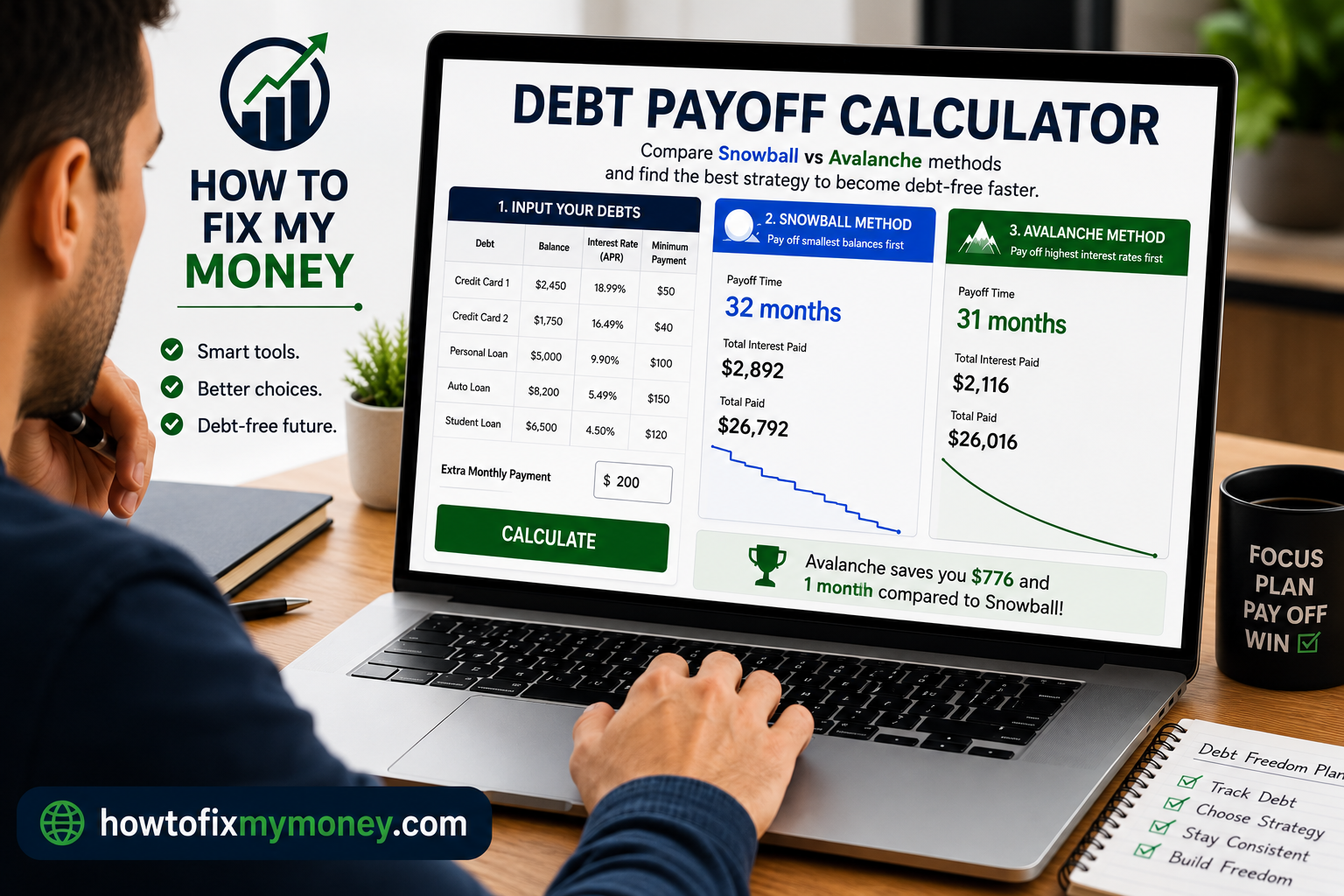
Your own numbers will look different, so run them yourself with our free Debt Payoff Calculator. It takes two minutes and shows you both timelines side by side.
So, Which One Pays Off Faster?
On paper, the debt avalanche pays off faster and always costs less in interest. That part is not up for debate. It is simple math.
In real life, the answer changes. Studies of consumer behavior have repeatedly found that people who pay off their smallest balance first are more likely to stay on the plan and actually finish it. A method that saves you eight hundred dollars is worth nothing if you abandon it in month fourteen.
So, the honest answer is this. The avalanche is faster if you finish it. The snowball is faster if the avalanche would have made you give up. You know yourself better than any calculator does.
The Method That Beats Both
There is a third option that most articles skip, and for many people it is the best one. It is sometimes called the hybrid method, and it works like this.
- Start with the snowball. Clear your one or two smallest debts first, even if their rates are low.
- Take the early win. Feel the list get shorter and the payment grow.
- Then switch to the avalanche. Once you have proof the plan works, attack the highest interest rate and stay there until you are done.
You get the early motivation of the snowball and most of the savings of the avalanche. In our example above, this hybrid would clear the store card in month four and then move straight to the twenty-six percent credit card, capturing most of that eight hundred dollar saving.
How to Choose the Right Method for You
Choose the Snowball If
- You have started a payoff plan before and stopped.
- You have several small debts and one or two large ones.
- You need to see progress to stay motivated.
- Your interest rates are all fairly similar, so the savings gap is small anyway.
Choose the Avalanche If
- One debt has a much higher rate than the rest.
- You are comfortable working toward a goal that takes a long time.
- Your income is steady and your budget is already under control.
- Saving money matters more to you than seeing quick wins.
One Rule That Applies to Both
Whichever method you choose, never miss a minimum payment on any debt while you focus on another one. Missing payments adds late fees and damages your credit score, which undoes far more than either method saves. If you think you are going to miss one, call the lender before the due date and ask what options they have. Lenders are far more willing to help before a payment is late than after.
Mistakes to Avoid with Either Method
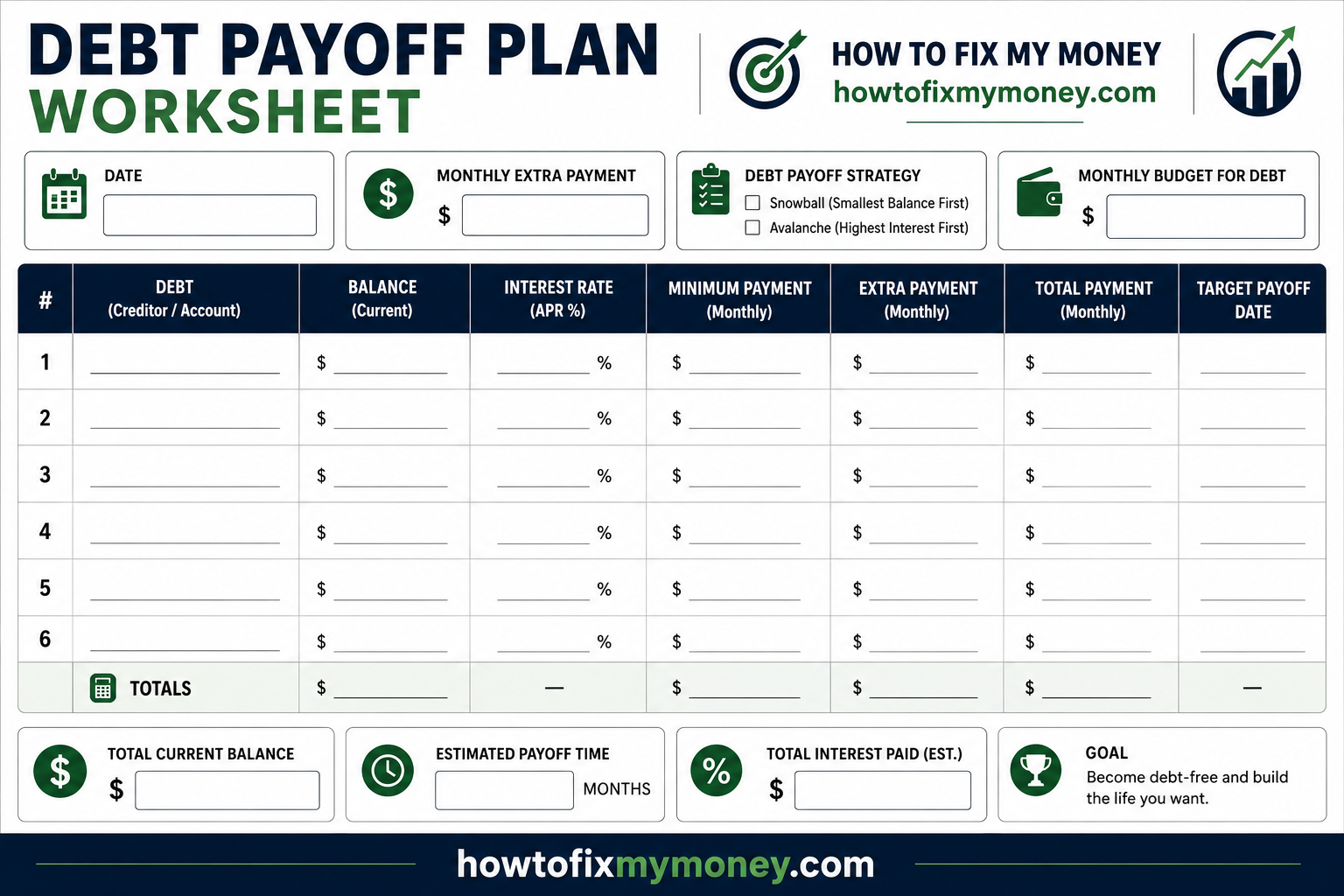
- Not writing your debts down. You cannot order a list you have never made. Write down every balance, rate, and minimum payment on one page.
- Switching methods every few months. Both work. Neither works if you keep restarting.
- Using a new credit card while paying off the old one. Your balance goes down and back up, and the plan never ends.
- Putting every single spare dollar at debt. A small emergency fund stops one surprise bill from putting you back on the card.
- Forgetting to move the payment. When a debt is cleared, that payment must roll onto the next debt. If it quietly disappears into everyday spending, the method stops working.
That fourth point comes up more than any other. Before you go all in on debt, put a small starter buffer aside, even if it is only a few hundred dollars. It is the difference between a flat tyre being annoying and a flat tyre undoing six months of work.
Where to Get Free, Trustworthy Help
You do not have to pay anyone to get good information about debt. Several government agencies publish free guidance.
- The Consumer Financial Protection Bureau explains your rights and what debt collectors are allowed to do.
- The Federal Trade Commission has plain-English guidance on getting out of debt and spotting bad actors.
- MyMoney.gov offers free budgeting and money basics from the U.S. government.
If your rates are so high that neither method makes a dent, it may be worth checking whether a lower-rate option could bring your interest down before you commit to a payoff plan.
Frequently Asked Questions
Is snowball or avalanche better for debt?
The avalanche method is better on paper, because it saves you the most money in interest and usually finishes sooner. But if you need the motivation that comes from quick wins, the snowball method is the one you are more likely to actually finish.
Is the debt snowball or avalanche better for credit card debt?
The avalanche is usually better for credit card debt, because credit cards carry the highest rates and the savings gap is widest there. But if you have several small card balances, the snowball can clear two or three of them quickly and shorten your list fast.
Does the debt snowball hurt my credit score?
No. Paying off any debt helps your credit score over time, whichever order you do it in. What hurts your score is missing payments, so keep every minimum paid on time no matter which method you use.
How much extra money do I need to start?
There is no minimum. Even twenty-five dollars a month on top of your minimums shortens your timeline. The order you pay in matters less than starting at all.
Can I switch from snowball to avalanche later?
Yes, and many people do. Clearing one or two small debts first and then switching to the highest rate is the hybrid method, and it is a sensible way to get both benefits.
What if all my debts have similar interest rates?
Then use the snowball. When rates are close together, the avalanche saves very little, so you may as well take the motivation instead.
Should I pay off a car loan or credit card first?
Almost always the credit card. Car loans usually carry much lower rates than credit cards, so the card is costing you far more every month it stays unpaid.
How long does it take to become debt free?
It depends on how much you owe and how much extra you can pay. In the example in this article, fifteen thousand dollars took about thirty-one to thirty-two months. Run your own numbers in the calculator to see your real timeline.
Final Thoughts
The debt snowball and the debt avalanche are both good plans, and arguing about which is better has probably kept more people in debt than either method has ever hurt. The avalanche saves more money. The snowball keeps more people going. The hybrid gives you a bit of each.
Pick the one you believe you will still be following a year from now, write your debts down today, and put your first extra payment toward the top of the list. The method matters far less than the momentum.
Ready to see your own timeline? Open the Debt Payoff Calculator or browse more guides in our Debt Relief section.